The Books That Stay With Us
Some books we finish. Others quietly become part of the person we are.
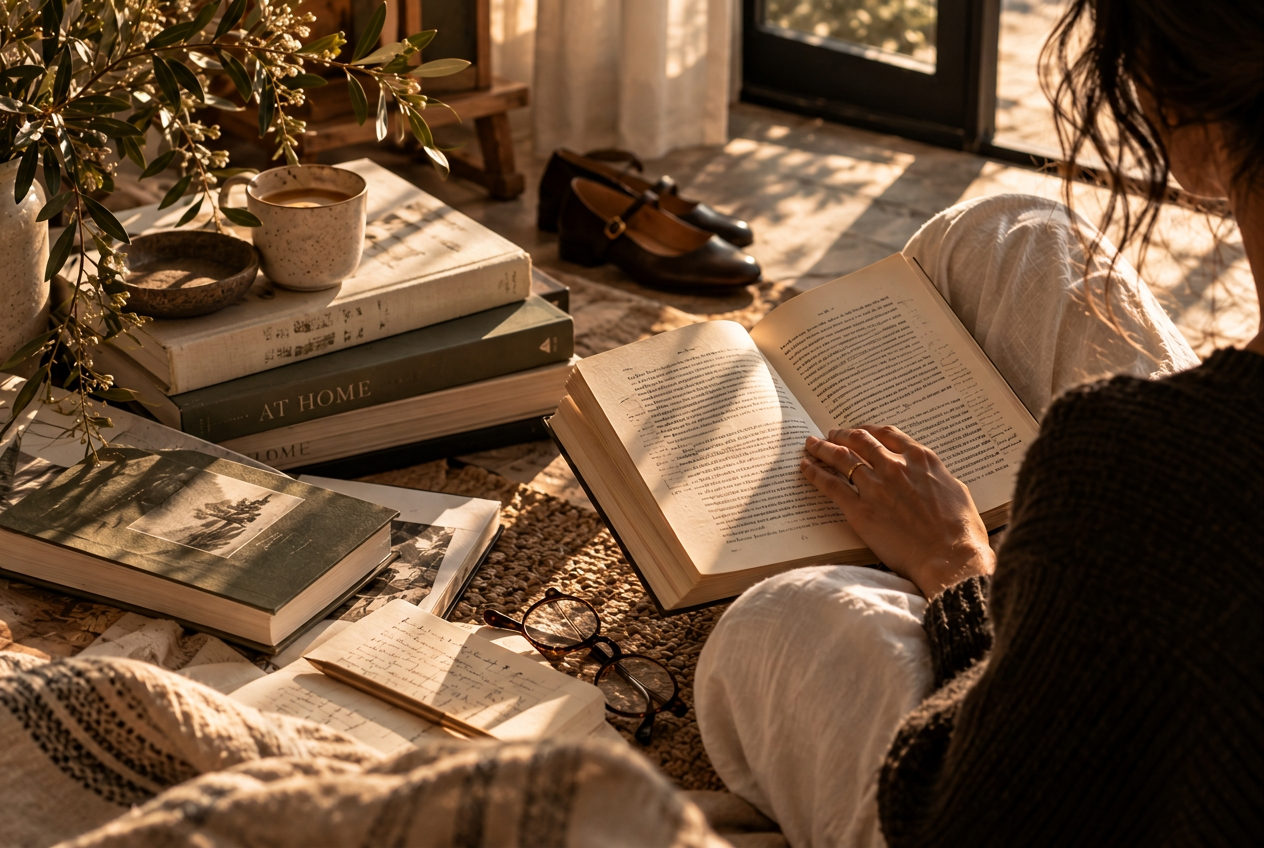
There are books we read.
And then there are books we remember.
Not necessarily because they were the best books we've ever read. Not because we underlined every sentence or recommended them to everyone we knew.
Sometimes we remember a book because of where we were when we read it.
A summer before everything changed.
A winter when we were lonely.
A year when the children were small and we were too tired to finish anything longer than a few pages at night.
A season when we were trying to understand ourselves.
Some books seem to become attached to a particular version of us.
Years later, we can pick one up from a shelf and remember not only the story, but the room we were sitting in. The person we were then. What we hoped would happen next.
The book has changed less than we have.
And somehow, that is part of why we keep it.
We don't always remember the story
There are books on our shelves whose plots we could no longer explain.
If someone asked what happened, we might have to admit that we don't entirely remember.
But we remember reading them.
The feeling of being inside them. The particular weight of the book in our hands. The cover. The pages. Maybe a sentence or two that stayed somewhere in the back of our minds without asking permission.
There are books we consume and move past.
And there are books that settle in.
They become part of the internal furniture of a life.
You discover, years later, that something you believe about love or courage or home or grief was partly shaped by something you read when you were twenty-three.
Perhaps that is one of the quiet powers of books.
They don't always change us dramatically.
Sometimes they change us almost imperceptibly.
A sentence enters.
A question remains.
A way of seeing the world becomes slightly wider.
And then we go on living.
The books that found us at the right time
There is a particular kind of book that seems to arrive when we need it.
Not because it contains an answer.
Sometimes it doesn't.
But because it gives language to something we have been carrying without words.
You read a sentence and stop.
You read it again.
You close the book for a minute.
Not because you don't understand it.
Because you understand it too well.
There are books that find us when we are grieving.
Books that find us when we are beginning again.
Books that find us when we are questioning everything.
Books that find us when we have become a little lost inside the life we worked so hard to build.
And sometimes the book doesn't solve anything.
It simply makes us feel less strange for having the question.
Someone else has wondered about this, too.
Someone else has sat in this particular uncertainty.
Someone else has tried to put words around the thing you could only feel.
Maybe that is one of the reasons we read in the first place.
Not always to escape our lives.
Sometimes to recognize them.
We change. The books stay.
One of the strange pleasures of growing older is returning to a book you loved years ago.
You expect to find the same thing.
Instead, you find yourself.
Little Women is one of those books that seems to grow older alongside its reader.
When we are young, Jo can feel like the whole story. Her independence, her restlessness, her refusal to fit neatly into what is expected of her.
Then we read it again years later and notice Meg.
Or Marmee.
We notice the mother quietly holding a family together. The ordinary work of making a home. The sacrifices that once seemed small but look entirely different after we've made some of our own.
We notice how differently the sisters understand love, ambition, marriage, family, and the lives they imagined for themselves.
The story hasn't changed.
But the reader has.
That may be one of the reasons we return to certain books.
We bring our marriages and disappointments.
Our children.
Our losses.
The things we know now that we didn't know then.
The years that have made us softer in some places and more guarded in others.
A book can become a kind of measuring stick for a life.
We return to it and discover how far we've traveled.
The evidence of a life is often in the margins
There is something wonderful about a book that has been used.
A bent corner.
A coffee stain.
A name written inside the cover.
A date.
A sentence underlined years ago by a version of you who apparently found it very important.
Sometimes there are notes in the margins that make no sense anymore.
What did I mean by this?
Why did I underline that?
Who was I when this mattered so much?
This is part of what makes physical books different.
They can carry evidence of our lives.
A receipt falls out from a restaurant we haven't thought about in years.
A pressed leaf appears between two chapters.
A child's drawing has somehow made its way into the pages.
A photograph is tucked inside.
A note from someone whose handwriting we recognize immediately.
The book becomes more than the book.
It becomes a container for a particular piece of time.
Perhaps that's why some books are so difficult to give away.
We're not only giving away the story.
We're giving away the version of ourselves that lived alongside it.
Some books teach us how to pay attention
There are also books that stay because they slow us down.
They don't necessarily give us a new idea.
They teach us to notice an old one.
Marilynne Robinson's Gilead is a book like that.
Its pages move through memory, family, mortality, forgiveness, ordinary days, and the strange tenderness of looking closely at a life that might otherwise seem unremarkable.
There are no easy declarations.
Instead, there is attention.
To a child.
To a marriage.
To an old friendship.
To sunlight falling across a room.
To the fact that a human life is made up of thousands of moments that seem insignificant while they are happening and precious once they are gone.
A good book can make the familiar visible again.
The child standing in the kitchen.
The husband coming through the door.
The cup left beside the sink.
The woman we have become.
The ordinary Tuesday that will one day be something we would give almost anything to have back.
Sometimes, in learning to look more carefully at a fictional life, we begin to look more carefully at our own.
A room full of books is a room full of lives
There is something comforting about a bookshelf.
Not because books make a room look intelligent.
Not because they photograph well.
But because every spine represents a door someone once opened.
A different life.
A different question.
A different way of seeing.
The books we keep.
The books we inherited.
The books we read to our children.
The books we hope our children will someday read.
The books we started and never finished because we weren't ready for them yet.
A bookshelf can tell you very little about a person and, somehow, quite a lot.
Perhaps that's why I like seeing books in photographs when they aren't arranged perfectly.
A book on the floor.
One left open on a chair.
A stack beside the bed.
A paperback tucked into a bag.
A cookbook with flour on the cover.
A novel with a receipt marking the page.
That feels more like a life with books.
Not curated.
Not perfectly arranged.
Just lived alongside.
What we keep
Maybe the books that stay with us aren't always the books that changed our lives in obvious ways.
Maybe they're the ones that accompanied us while our lives were changing.
They sat beside us while we waited.
They traveled with us.
They lived on nightstands and kitchen counters.
They gathered dust.
They moved from one house to another.
They survived the seasons when we had no time to read them.
And eventually, somehow, they became part of the story.
A book can hold a version of us that no photograph ever could.
The younger woman.
The new mother.
The grieving daughter.
The woman beginning again.
The woman who wasn't sure what came next.
The woman who thought she knew exactly what came next.
They are all still somewhere inside us.
And sometimes all it takes is pulling an old book from a shelf, feeling its worn cover beneath our hands, and opening to a page we haven't seen in years.
There we are.
Still becoming.
Still reading.
Still finding our way through.
For the books that found us when we needed them—and stayed long enough to become part of the story.
More from
All Culture 
Keepsakes for What Matters Most
Meaningful ideas to remember, celebrate, and pass on.
September 16, 2026 · 3 min read
The Life We Don't Post
There is the life we share, and then there is the life that actually forms us.
September 23, 2026 · 7 min read
When You Don’t Feel Faithful
Honest thoughts for the days that feel heavy.
September 21, 2026 · 4 min readA small letter for the long seasons.
Thoughtful words on faith, culture, healing, motherhood, and the ordinary beauty of a life being lived.
Join the Quiet Letter