
Keepsakes forWhat Matters Most
Thoughtful ways to bring family stories to the Thanksgiving table and carry this year’s memories forward.
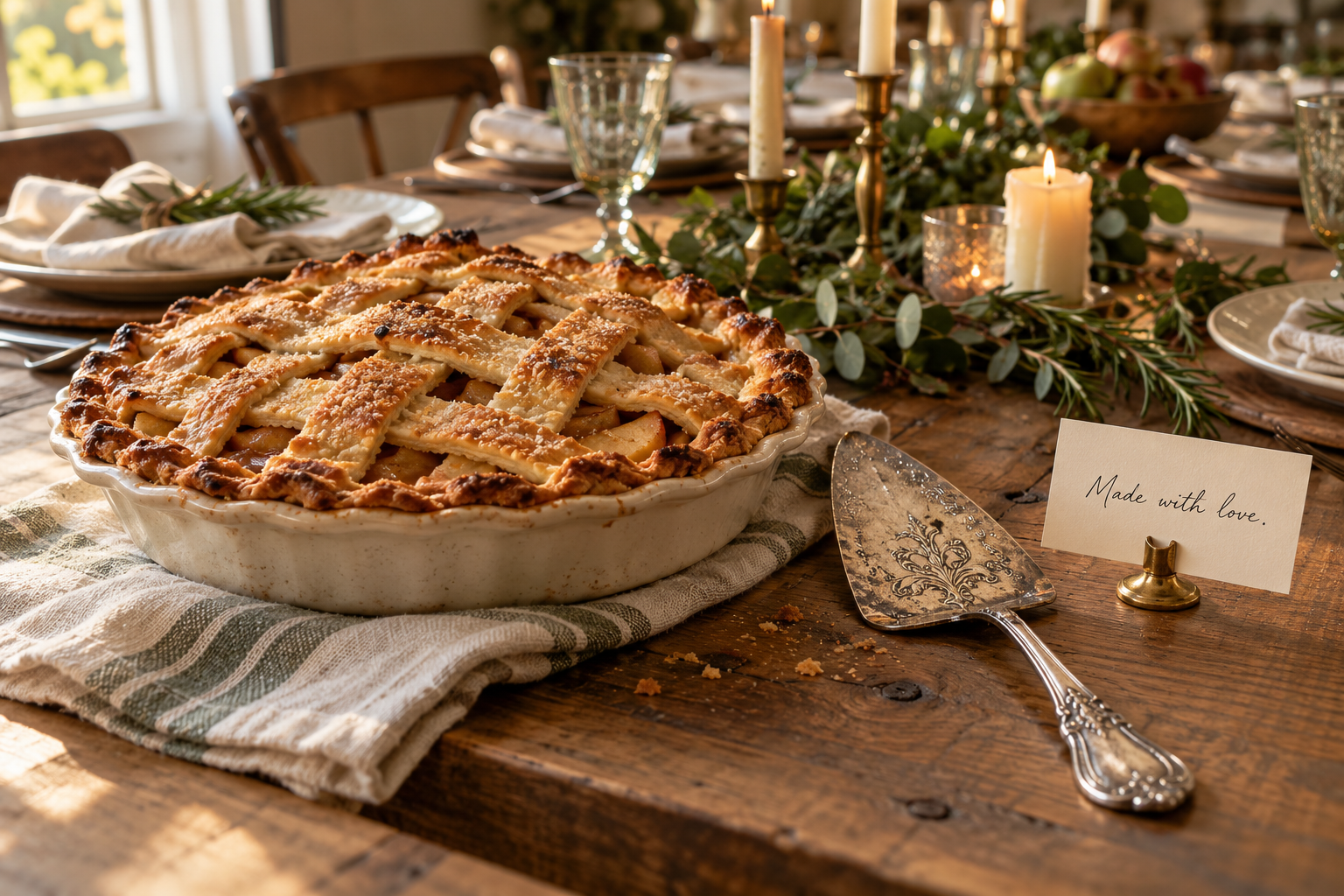
Before the groceries are bought and the table is set, there is something worth looking for: an object with a story.
It might be a serving spoon that appeared at every family holiday, a recipe written on an index card, or a photograph of the people who once gathered around another table. Brought into the day with a little explanation, an ordinary possession can give guests something unexpected: a connection to the life that came before this gathering.
Thanksgiving offers an opportunity to share those stories while there are people around to tell them. A few considered choices can help younger relatives discover something new, welcome guests into the family’s history, and leave a record of the day you are making together.
Begin with one meaningful object
Choose something connected to a person, place, or tradition you would enjoy talking about. One object gives the story a clear starting point.
A familiar serving dish might hold its customary recipe. A family photograph could stand beside the drinks. A handwritten menu from an earlier Thanksgiving might sit on a side table where guests can look at it.
Think about how it will be encountered. Something placed near the food invites a different kind of conversation from an album passed around after dinner.
If the object is fragile, its materials are uncertain, or you would worry about using it, display it nearby or use a photograph of it. The story can still be part of the meal.
Try thisBefore guests arrive, write down three things about your chosen object: who it belonged to, how it was used, and what you remember about it. Those details give you a natural way to introduce it.
Put the story beside the object
An heirloom can become anonymous surprisingly quickly. A small card supplies the context that appearance alone cannot.
Keep the wording specific. A card might read: “This was Aunt June’s pie server. She brought apple pie every Thanksgiving, usually wrapped in a kitchen towel because she never remembered her carrier.”
A detail like that gives someone character. It also offers guests an easy opening to ask a question or add a memory.
If you do not know the history, say so. This may be the year someone recognizes the handwriting, identifies the person in the photograph, or remembers where the dish came from.
An heirloom can become anonymous surprisingly quickly.
Save the knowledge behind a family recipe
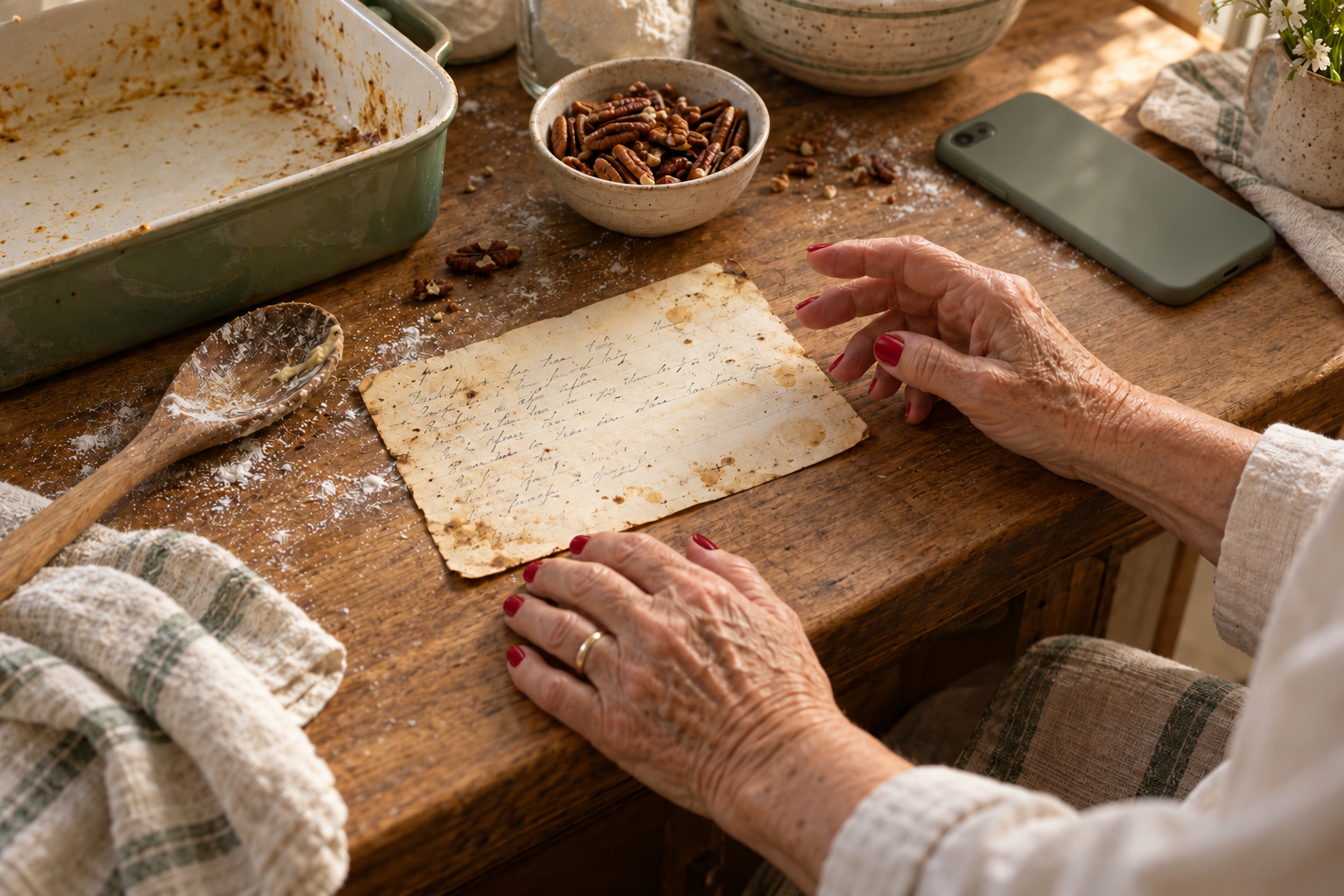
A recipe card may list ingredients while leaving out everything an experienced cook knew by instinct.
If the person who makes the dish is joining you, ask about those missing details. Which pan do they use? What should the mixture look like? How do they judge when it is ready? Have they changed anything over the years?
With their permission, photograph the recipe and record their answers. A short voice recording can preserve both the instructions and the familiar way they explain them.
For guests, make a clearly typed copy with the cook’s name and a brief note about when the dish was served. Include an image of the original handwriting if you have it.
A useful question“What would someone making this for the first time need to know?”
Make room for other people’s histories
A gathering becomes richer when guests can contribute to its traditions.
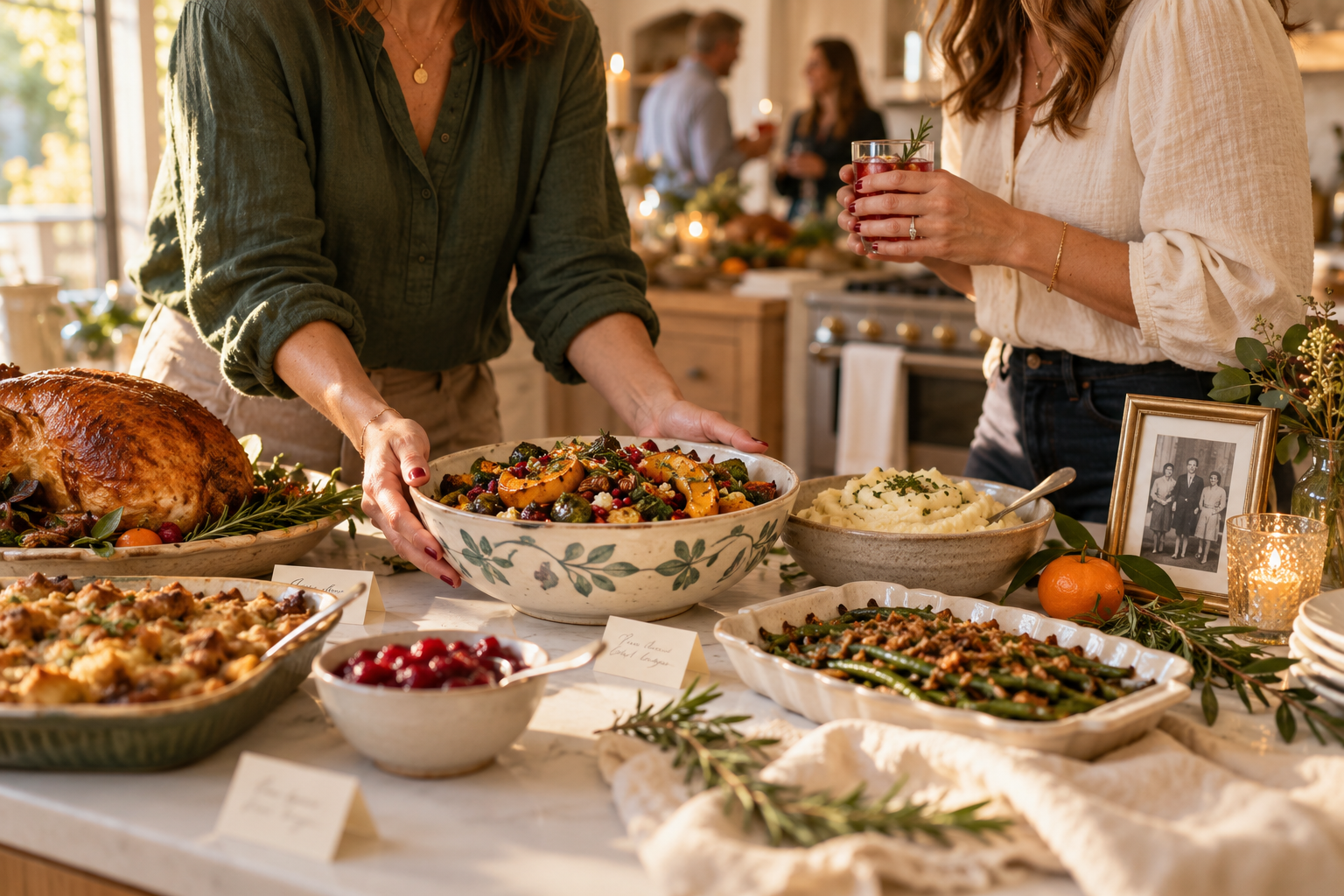
Ask someone about a dish they grew up eating, a holiday custom from their childhood, or an object they still associate with home. These conversations can happen naturally while setting out food or clearing plates.
For a guest joining the family for the first time, explain the tradition as you include them: who usually makes the stuffing, why there are two cranberry sauces, or how a particular dessert became essential.
Leave room for their version, too. A new contribution may become something everyone asks for next year.
Keep a record of this Thanksgiving
Choose one simple way to document the day.
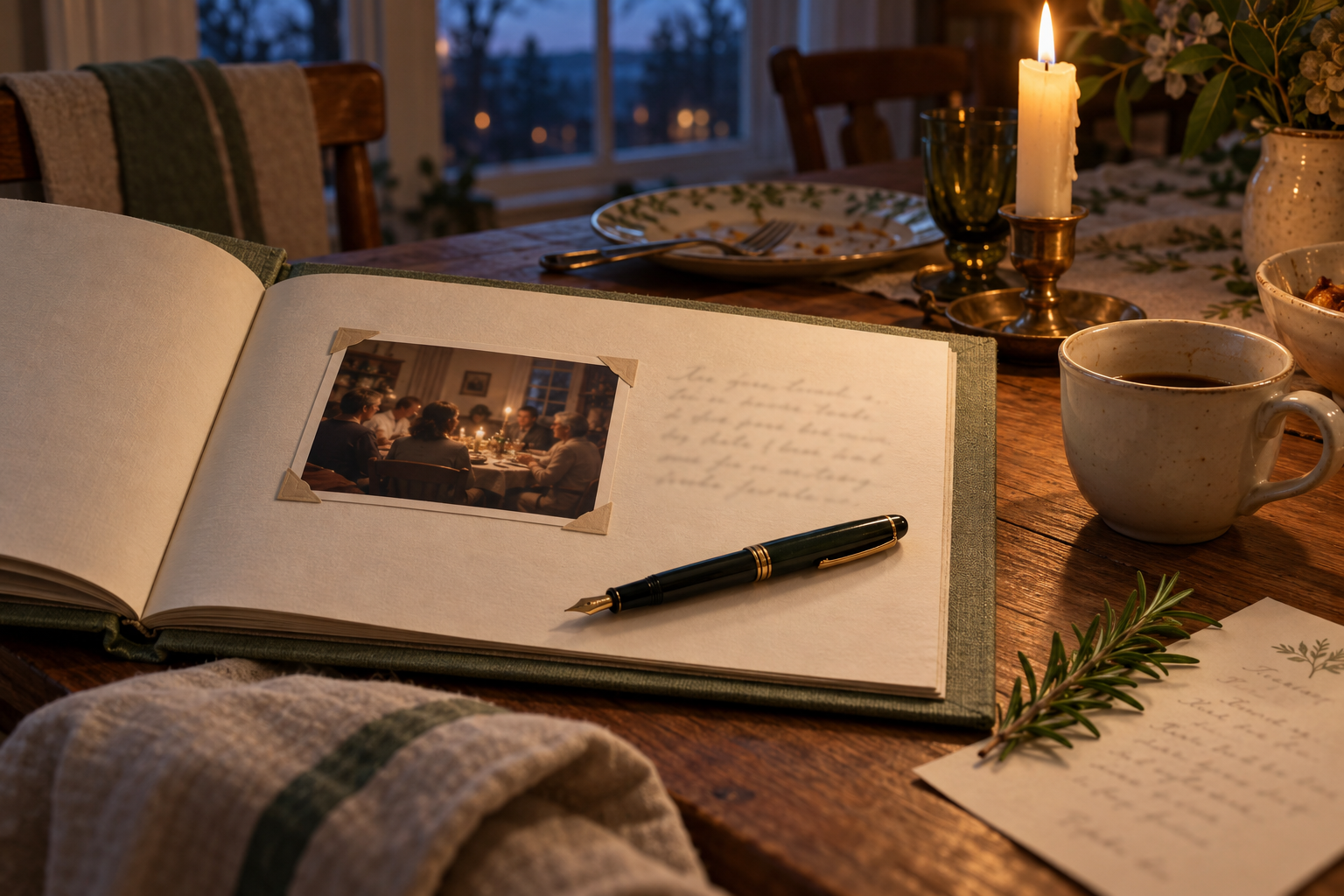
A photograph of everyone at the table is a good beginning. Add the date, location, and names in the caption or alongside the print. Those details are easiest to capture now.
You might also keep the menu, note who brought each dish, or start a gathering book with one page for each year. Include something particular: the first Thanksgiving in a new home, a child’s contribution to dessert, or the recipe everyone requested.
Choose a record you will enjoy continuing. A dated photograph and a few sentences can hold a great deal.
A dated photograph and a few sentences can hold a great deal.
Begin with what you have
You can start a family archive this year.
Write out a recipe you make often. Photograph your table. Save a note from someone who came. Record where you gathered and what you served.
A keepsake gains meaning through the life around it. Years from now, someone may recognize your handwriting, remember the cake you always made, or ask about the people in a photograph.
A few words recorded today will give them somewhere to begin.
Choose one object to bring out. Ask one question about its history. Record one detail you want someone to know. Let that be enough for the first year.