
Preserve the Season
Five simple ways to keep something good a little longer.
There is a point in every season when the kitchen starts collecting things.
Too many tomatoes on the counter. Herbs growing faster than you can use them. Peaches that all somehow decide to become perfectly ripe on the same Tuesday.
This is usually when preserving food starts sounding like something we should know how to do.
But preserving a season doesn't have to mean forty jars lined up for winter.
It can be one jar of peach jam in the refrigerator.
A handful of herbs turned into salt.
Tomatoes roasted before they become too soft to use.
Lemons squeezed and frozen instead of forgotten in the back of the produce drawer.
Small acts of keeping.
Nothing particularly heroic.
Just a way of saying:
This is good right now. Let's not waste it.
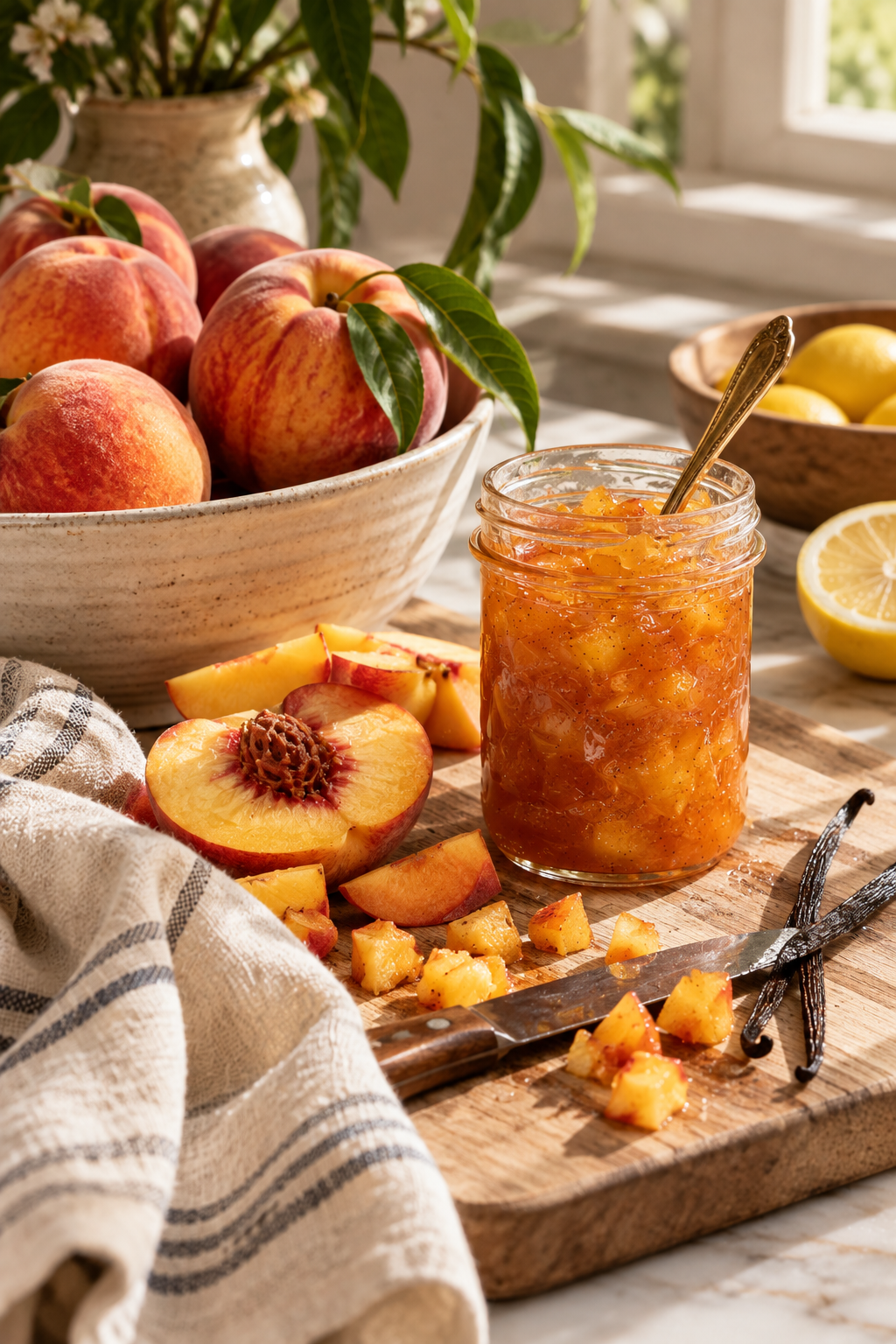
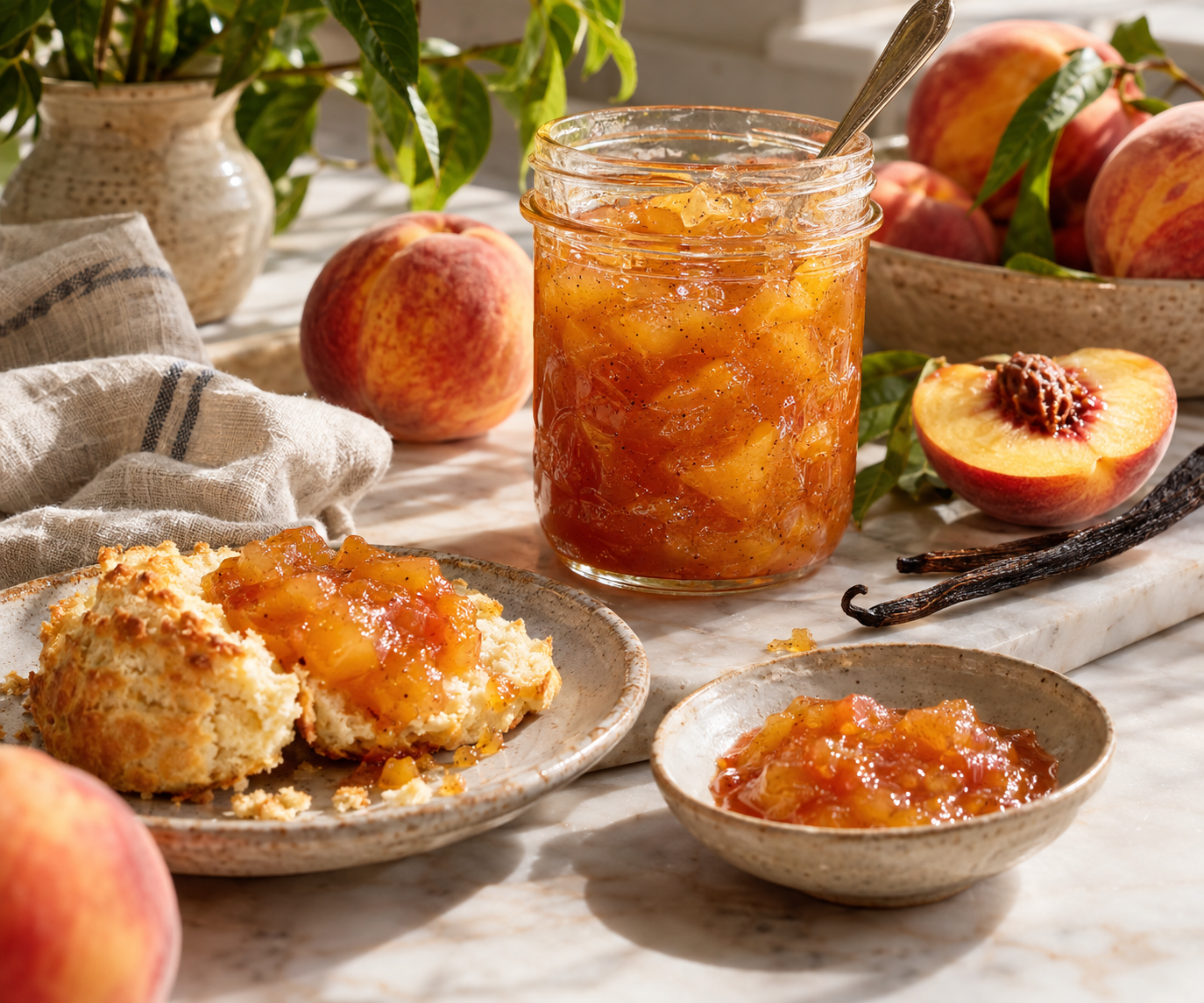
Peach + Vanilla
Refrigerator Jam
the peaches all decide to ripen on Tuesday.
This isn't the bring-out-the-canning-pot kind of jam.
It's one beautiful jar meant to be made easily, tucked into the refrigerator and eaten while it's good.
Peach and vanilla belong together. The vanilla doesn't need to turn the peaches into dessert. Just enough makes ripe fruit taste somehow even more like itself.
- 1 lb ripe yellow peaches
- ½ cup sugar
- 1½ tbsp fresh lemon juice
- ½ tsp vanilla bean paste
- small pinch fine sea salt
- Pit and finely chop the peaches.
- Add the peaches, sugar and lemon juice to a medium saucepan and let them stand for about 10 minutes, until juicy.
- Bring to a gentle boil, then reduce to an active simmer. Stir frequently and lightly mash some of the peaches as they soften. Cook until the mixture becomes glossy, thick and spoonable.
- Remove from the heat and stir in the vanilla and tiny pinch of salt.
- Spoon into a clean jar, cool, cover and refrigerate.
warm biscuits · toast · yogurt · oatmeal · vanilla ice cream
Keep refrigerated and enjoy within 1–2 weeks. Discard sooner at any sign of mold, fermentation or off odor.
Quick-Pickle Something
Because vinegar makes things interesting.
Cucumbers.
Shallots.
Radishes.
Red onions.
There are very few vegetables that aren't improved by spending a little time in something sharp.
For this one, I want:
CUCUMBER + SHALLOTdill · peppercorn · a little sweetness
- 1 medium cucumber, thinly sliced
- 1 small shallot, thinly sliced
- ½ cup white wine vinegar
- ½ cup water
- 1 tbsp sugar
- 1½ tsp kosher salt
- 1 tsp black peppercorns
- 2–3 sprigs fresh dill
- Pack the cucumber and shallot into a clean jar.
- Warm the vinegar, water, sugar and salt just until the sugar and salt dissolve.
- Pour the brine over the vegetables, add the peppercorns and dill, and let cool.
- Cover and refrigerate for at least a few hours before eating.
a few hours
tomorrow
Cold, crisp and bright enough to rescue a sandwich, wake up a grain bowl or sit beside something hot off the grill.
Suddenly Tuesday's leftovers appear to have had a plan all along.
sandwiches · grilled food · salads · bowls · things involving melted cheese
Your Garden, in a Jar
Rosemary + Thyme Herb Salt
Don't let the rosemary win.
Herbs have a habit of behaving as though you operate a restaurant.
You need three sprigs of rosemary.
The plant gives you enough rosemary to season a small village.
So keep some.
Rosemary and thyme make the kind of herb salt you'll actually reach for: roast chicken, potatoes, eggs, vegetables, soup, warm bread with olive oil.
CHOP. DRY. KEEP.
The important word here is dry. For a pantry version, the herbs and finished mixture need to be thoroughly dried rather than sealing fresh, damp herbs into a jar.
- ¼ cup fully dried rosemary, finely crumbled
- ¼ cup fully dried thyme leaves
- 1 cup coarse kosher salt or flaky sea salt
1 part dried herbs : 2 parts salt
Make sure the herbs are completely dry before they meet the salt.
Crumble or finely chop the dried rosemary and thyme, combine with the salt, and mix thoroughly.
Transfer to a clean, completely dry jar.
Scale it up.
Scale it down.
Just don't let the rosemary win.
potatoes · chicken · eggs · vegetables · bread
Save the Tomatoes
Before they become a situation.
You know the tomato.
It was beautiful three days ago.
Yesterday it was questionable.
Today it is sitting on the counter asking you to make a decision.
This is the decision.
Slow-roast it.
- 2 lb ripe tomatoes
- 3 tbsp olive oil
- 3 garlic cloves, lightly smashed
- 1 tsp kosher salt
- 4–5 thyme sprigs
Heat the oven to 275°F.
Halve the tomatoes and arrange them cut-side up on a rimmed sheet pan.
Add the olive oil, garlic, salt and thyme.
Roast for 2–3 hours, until the tomatoes have collapsed, the edges are beginning to darken and the centers are sweet, concentrated and still a little juicy.
collapsed · concentrated · still a little juicy
Suddenly you haven't rescued an aging tomato.
You've made an ingredient.
spoon over ricotta toast
toss through pasta
freeze for another meal
This may be the highest possible calling of a tomato that almost didn't make it.
Freeze the Lemons
Future you will be ridiculously pleased.
This may be the least romantic thing we're making.
It may also be the one you use most.
Before the lemons become hard little yellow artifacts in the produce drawer, juice them.
Pour the juice into an ice-cube tray and freeze. Once solid, transfer the cubes to a labeled freezer container.
You can zest the lemons first and freeze the zest separately.
1 medium lemon usually gives you about 2–3 tablespoons of juice.
Freeze the juice in measured portions so you know exactly what you're grabbing later.
If your ice-cube tray holds about 1 tablespoon per cube, label the container accordingly.
1 CUBE≈1 TABLESPOON
Tray sizes vary, so measure one compartment with water first if you want to know exactly how much your cubes hold.
JUICE IT. FREEZE IT. USE IT.
Thaw what you need for dressings, or use the juice in cooking, sauces and drinks.
dressings · soups · pan sauces · marinades · tea · sparkling water
This is less Little House on the Prairie and more person who finally stopped throwing away lemons.
Both have their merits.
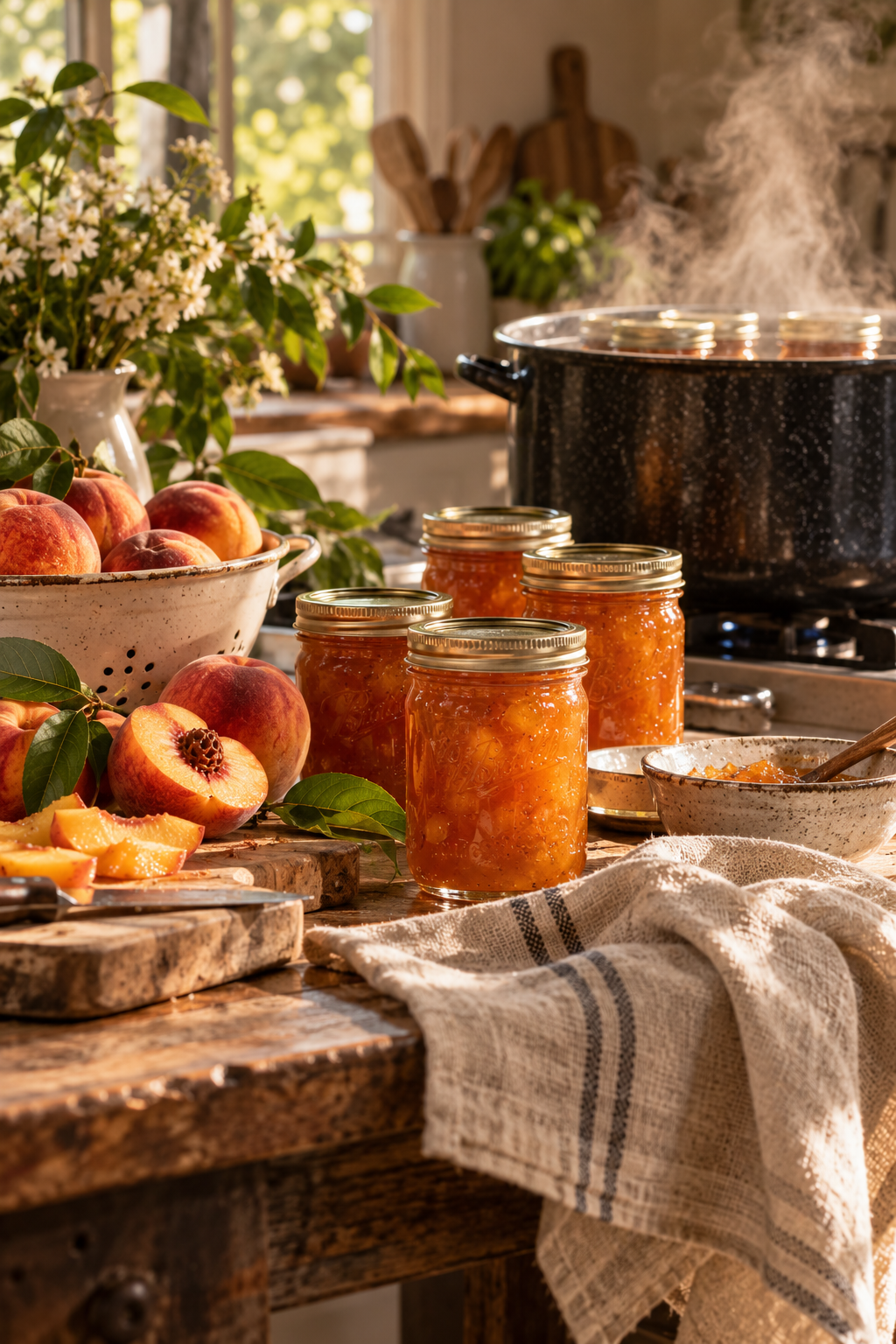
Put Something Up.
There is another kind of preserving.
The bubbling pot.
The rows of jars.
Fruit cooking on the stove.
And eventually that deeply satisfying little ping from a cooling lid.
Traditional canning is worth learning.
Peaches. Blackberries. Strawberries. Figs. Plums.
Start with a tested preserve, then explore flavor variations that stay within tested guidance.
But this is one corner of the kitchen where creativity comes after food safety.
Shelf-stable preserves depend on proper acidity, ingredient proportions, jar size and processing. For anything you plan to store at room temperature, start with a research-tested recipe and follow its processing instructions carefully.
National Center for Home Food PreservationKEEP A LITTLE OF THE GOOD STUFF
Maybe preserving a season isn't really about preparing for some distant future.
Maybe it's about paying attention to what's here.
The peaches are good.
The herbs are everywhere.
The tomatoes are ripe.
The lemons are sitting right there.
Use them.
Save a little.
And let another day enjoy what was good about this one.
Keep a little of the good stuff.