
DRY, BLEND, KEEP
A few good things to do with the herbs that got away from you.
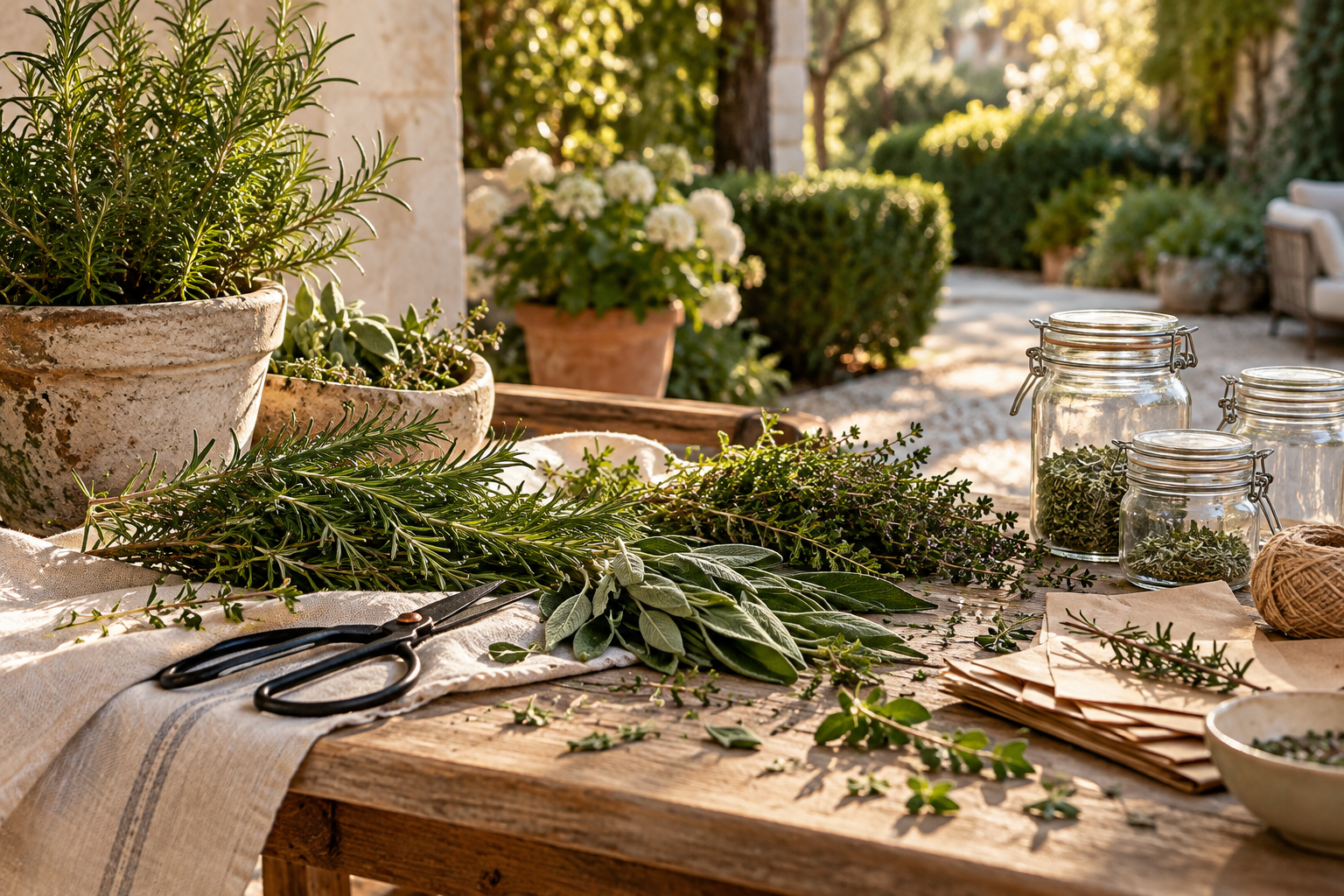
You planted three little herb plants in April.
This felt reasonable.
It is now September and the rosemary has developed real estate ambitions.
Before it takes over the property, we should probably do something with it.
There is something satisfying about taking what grew outside all summer and finding a place for it in the kitchen.
A bundle hanging from a hook.
A handful drying on a tray.
A jar you open months from now that still smells like the garden.
You don't need much.
A pair of scissors.
A little patience.
And apparently significantly more rosemary than anyone anticipated.
Start with what you actually use.
This isn't harvest-the-homestead-at-dawn territory.
Walk outside with a pair of scissors and cut what you're actually going to use.
Rosemary.
Thyme.
Oregano.
Sage.
Choose healthy stems and leaves. Shake off any obvious hitchhikers, rinse when needed, and let everything dry completely before you move on.
The important part is not collecting everything.
It's collecting enough.
The garden has contributed enough bugs.
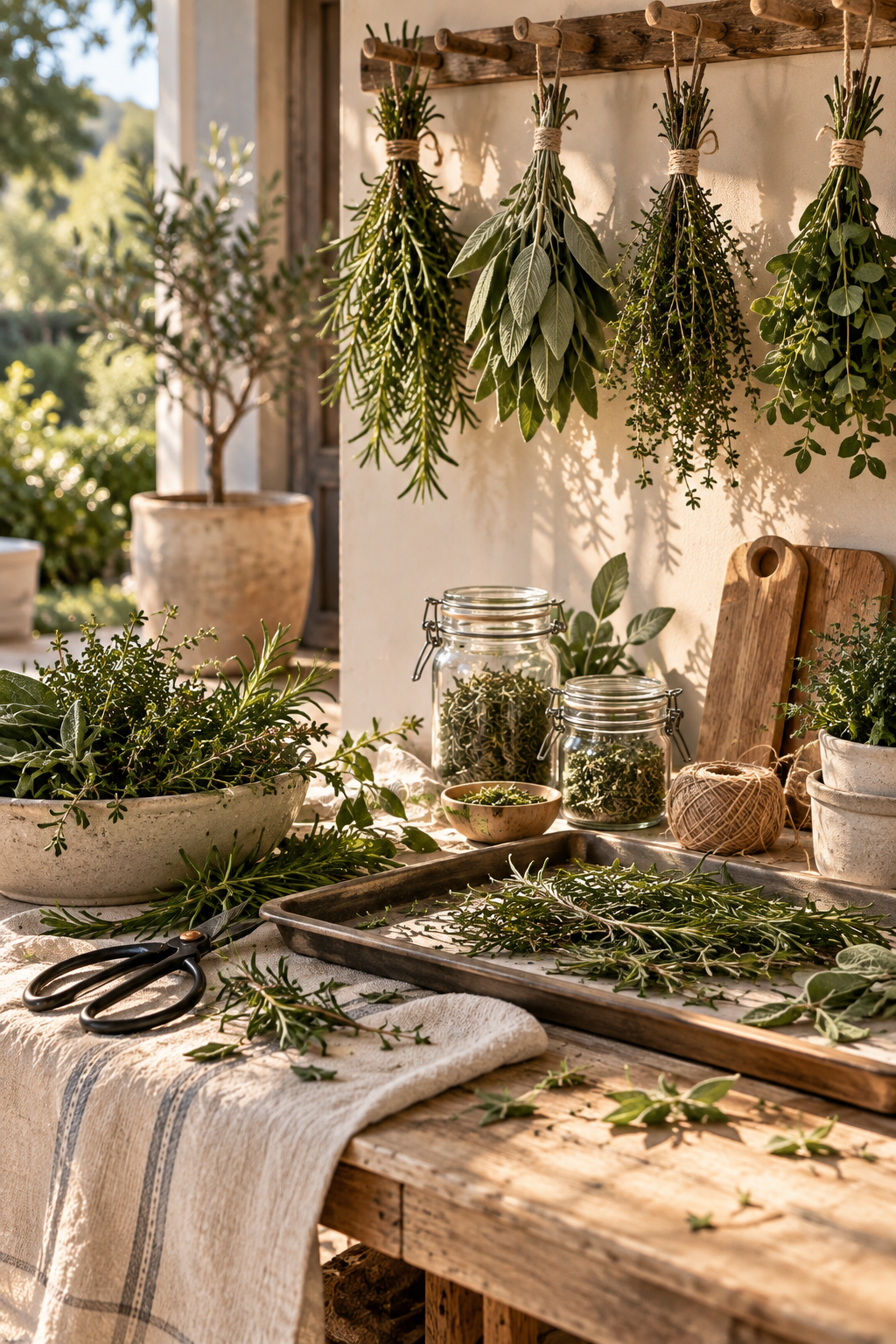
Hang a few things upside down.
There is something absurdly satisfying about this.
Small bundles of sturdy herbs can be tied and hung somewhere dry with good air circulation and away from direct moisture.
Rosemary, thyme, oregano and sage are good places to begin.
Keep the bundles small enough for air to move around them.
Then leave them alone.
The goal isn't herbs that merely look dry.
They should feel properly dry before they go into a jar.
THE SNIFF TEST
Rub a little dried herb between your fingers.
You should still know exactly what it is.
If it smells like absolutely nothing, congratulations. You've made decorative hay.
Leave a little texture.
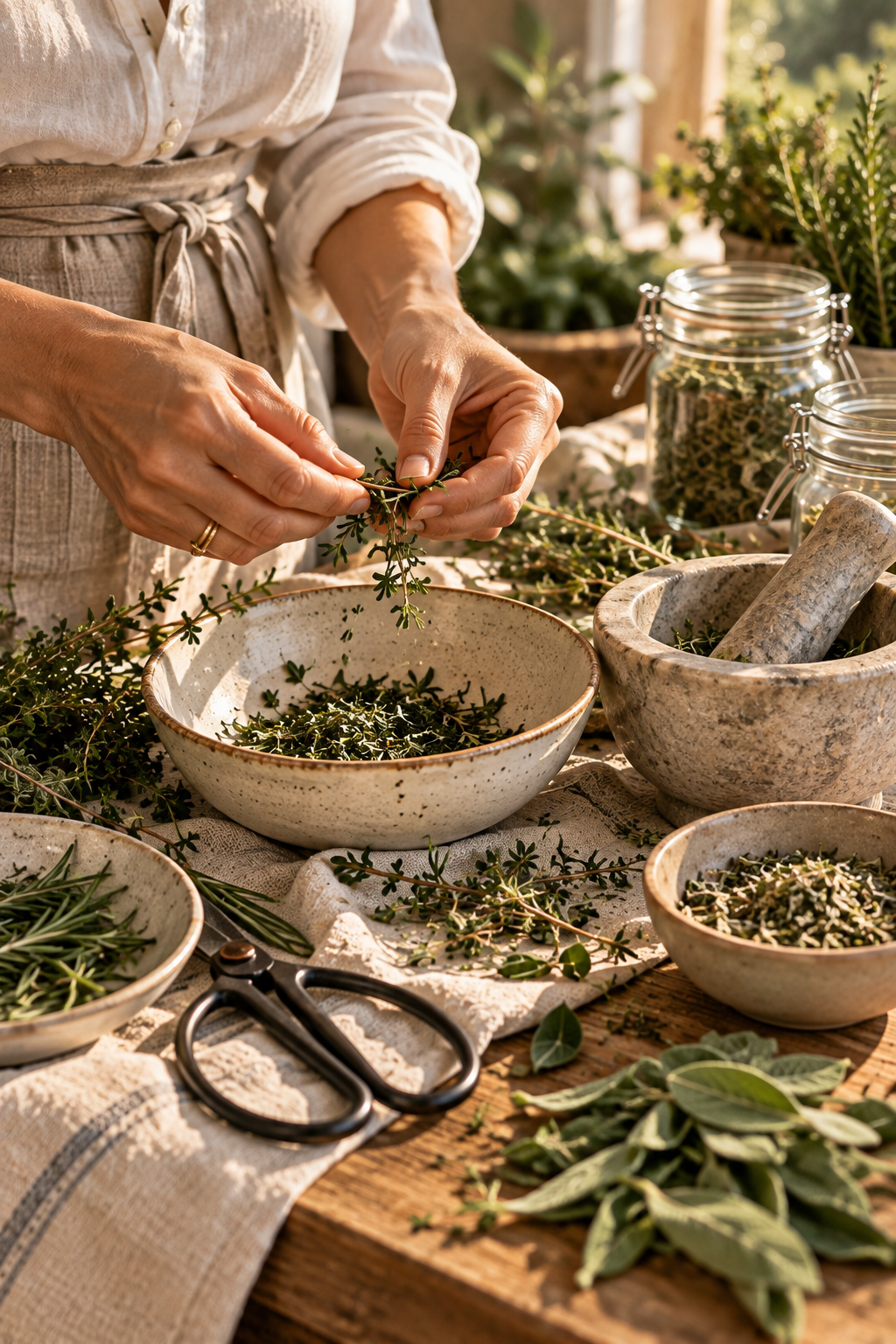
Once the herbs are completely dry, strip the leaves from the stems.
This is the satisfying part.
Use your fingers for thyme and rosemary. A mortar and pestle works when you want something a little finer.
But resist the urge to turn everything into powder.
A little texture makes dried herbs feel like something you preserved rather than something that arrived in a shaker.
We are making dinner, not drywall compound.
Make something you'll actually reach for.
This is where separate jars of dried herbs become something useful.
Start with the flavors you already cook with.
Rosemary.
Thyme.
Sage.
Maybe dried lemon peel.
Maybe good salt.
The point isn't to create seventeen blends you'll forget about in the back of a cabinet.
Make one.
Use it.
Then make it again.
roast chicken · potatoes · white beans · focaccia · tomatoes · eggs · vegetables
MAKE ONE FOR SOMEONE ELSE.
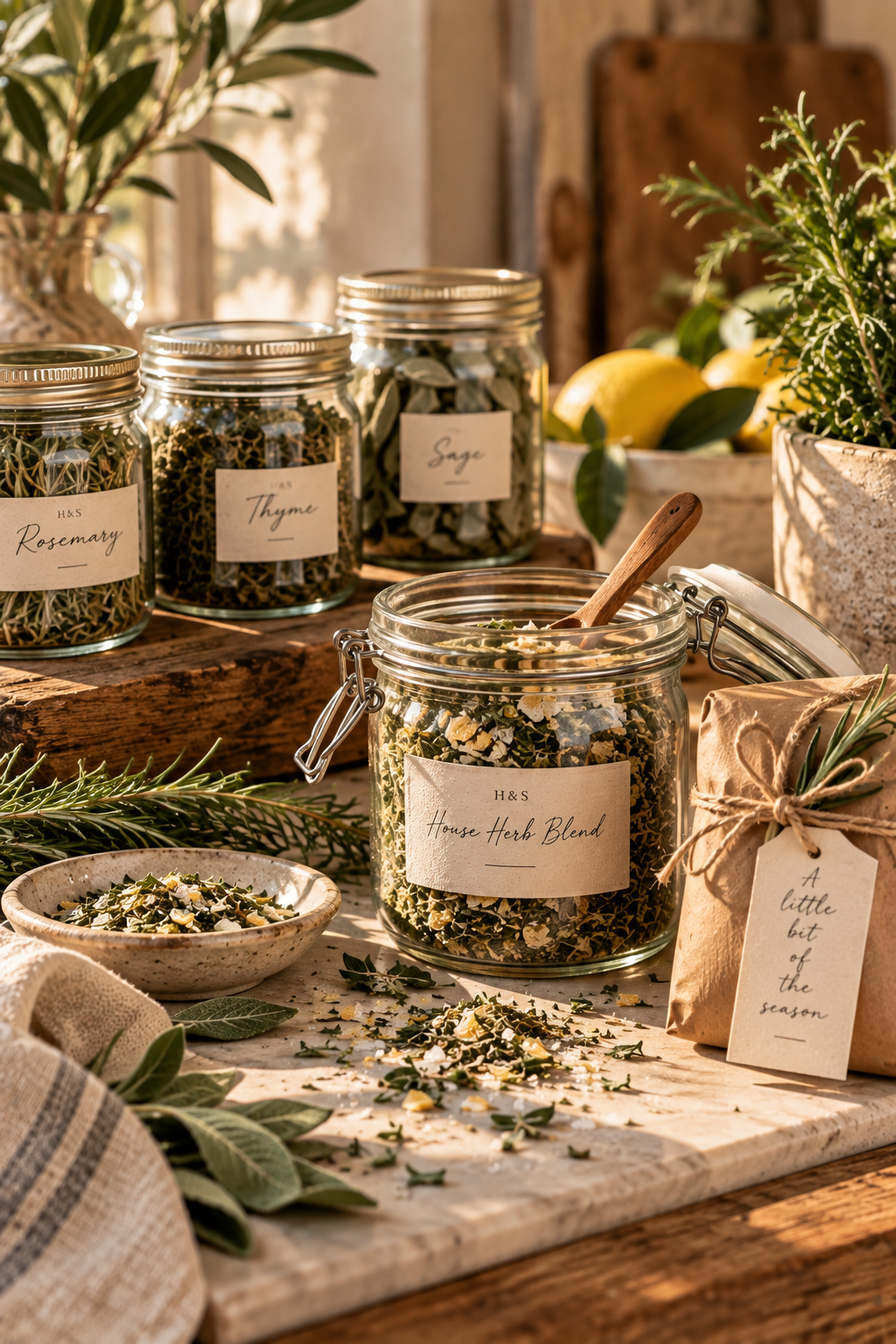
Put some in a little jar.
Write what it is on a piece of paper.
Tie it on.
Give it to somebody.
No elaborate gift basket required.
Apparently we are people who give away herb salt now.
Make enough to use, not enough to inherit.
Once herbs are completely dry, store them in clean, dry containers away from heat, moisture and strong light.
Label them.
Date them.
Then put them somewhere you'll actually see them.
There is no prize for having twelve jars of forgotten rosemary at the back of a cabinet.
Preserve what you'll use.
Cook with it.
Give some away.
And when the jar gets low, let that be a good thing.
We are not provisioning for a minor societal collapse.
KEEP WHAT GREW.
Maybe that's part of the pleasure of growing something.
For a while, it belongs to the garden.
Then it comes into the kitchen.
It hangs from a hook. It dries on a tray. It gets crushed between your fingers and tucked into a jar.
And months from now, when the garden looks completely different, you open the lid.
There it is.
A little bit of the season you thought had already passed.
Keep what grew.