
BeforeEveryoneArrives
The quiet work of making room for the people we love.
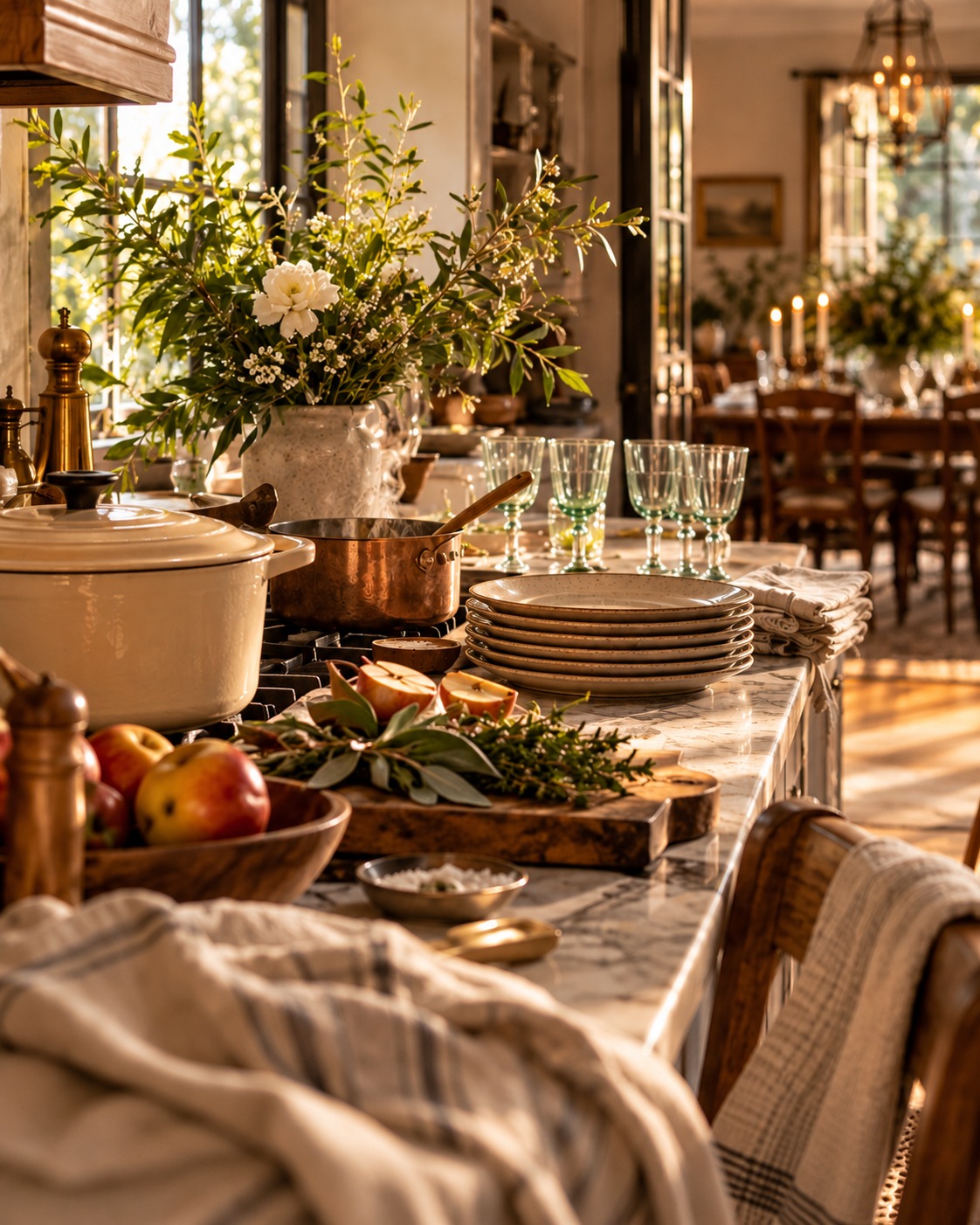
There is an hour before everyone arrives when the house looks nothing like the photographs.
A dish towel is thrown over the counter. Something is simmering too quickly on the stove. The good glasses are still waiting to be washed, someone has moved an extra chair to the table, and there is almost certainly one thing you meant to do that will not get done.
The flowers may be arranged.
The kitchen is not.
And somewhere in the middle of all of it, a home is being made ready for other people.
We tend to think hospitality begins when the door opens.
It begins much earlier than that.
I · THE HOUR BEFORE
Long before anyone rings the bell, someone has been thinking about who is coming. There are glasses to set out and chairs to find, food to finish and towels to fold. But beneath those visible tasks is another kind of preparation—the quiet remembering that makes a gathering feel like more than a meal.
Someone remembers who takes coffee and who would rather have tea. Who needs the chair with the better back. Which child will not eat the fancy thing. Whether Grandma will be cold. Who has not seen whom since the argument. Whether there will be enough food. Whether the person coming alone will feel alone once they get there.
These are small considerations. Most will never be announced. Few will be noticed.
But they are the architecture of welcome.
II · WHAT PEOPLE REMEMBER
We can spend a remarkable amount of energy preparing the parts of a gathering people are least likely to remember.
The napkins do not have to match. The flowers do not have to be arranged perfectly. No one needs to know that the potatoes were reheated twice or that the pie crust did not behave the way it was supposed to.
What people remember is often much smaller.
They remember that there was a place for them. That someone handed them something to drink before they had to ask. That a chair was pulled out. That everyone ended up standing in the kitchen even though the living room had been cleaned for company.
They remember laughing. Being asked another question. Being told to take leftovers. Staying longer than they intended.
A beautiful table can make people want to sit down. Hospitality is what makes them feel there was always a place for them.
III · MAKE ROOM
Making room is not always as simple as adding another chair.
Sometimes it means welcoming someone you do not know very well. Sometimes it means changing a tradition because the family has changed. Sometimes it means noticing who might otherwise spend the day alone.
And sometimes the empty place is the thing everyone notices, even if nobody says it out loud.
A gathering can hold gratitude and absence at the same table. Joy does not require us to pretend that nothing has changed. Hospitality can be generous enough to make room for that, too.
Maybe this is why the work before everyone arrives matters. We are not simply arranging a room. We are deciding, in dozens of ordinary ways, to make space for other people as they are.
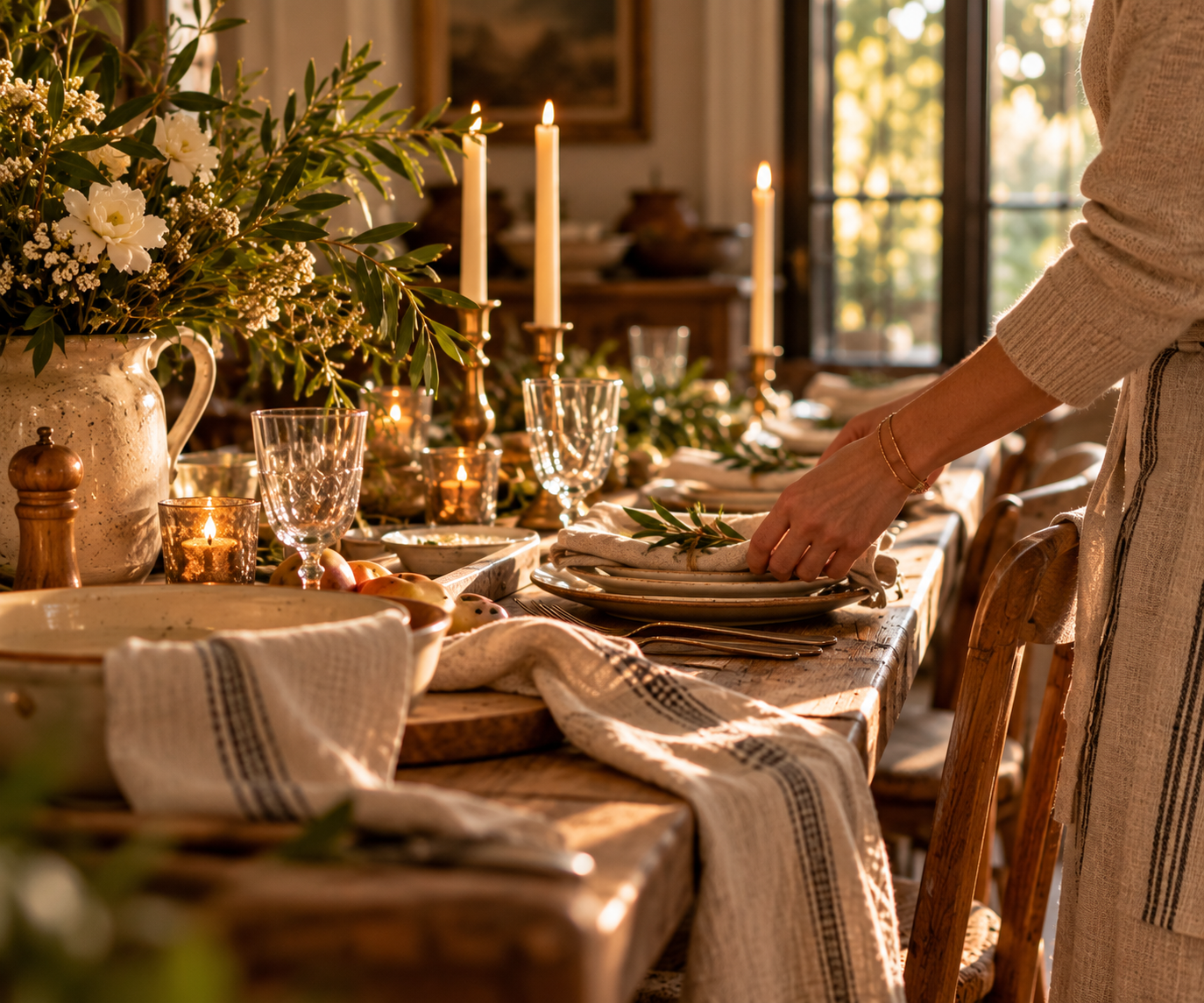
WHEN THE DOOR OPENS
Eventually, the doorbell rings.
Someone comes in carrying a dish you told them not to bring. Coats land on the chair you just cleared. The kitchen fills before the living room does. Someone asks what they can do, and someone else starts eating something they were supposed to wait for.
And just like that, the part you prepared for is over.
The house is no longer ready.
It is full.
Maybe that is the difference worth remembering.
A beautiful table can make people want to sit down.
But hospitality is what makes them feel there was always a place for them.
Long before everyone arrived, someone made room.